

The household
Civilisation begins with the people closest to you.
Relationships, children, fatherhood, trust and inheritance. The household is one of the fundamental structures through which civilisation continues.
The structure is not sacred. The outcome matters.
The Code does not require every man to construct the same life. Monogamy is not inherently weak. Polygamy is not inherently strong. A strong monogamous family can create extraordinary continuity; a dysfunctional polygamous household is still dysfunctional.
Judge the structure by what it produces: stability, capable children, trust, responsibility and a future worth inheriting. The label cannot do that work for you.
Build the conditions for continuity.
Family & fatherhood
Children need presence, example, education and adults who keep their commitments. Preparing the next generation is daily work.
Trust & partnership
Be honest about the life you are proposing. Build mutual understanding, clear commitments and room for every adult to choose freely.
Household order
Agree responsibilities, boundaries and the rhythms that make a home dependable. Deal with conflict before it becomes the culture of the house.
Inheritance & identity
Pass on knowledge and judgment as well as assets. Teach children how to carry responsibility and improve what they receive.
Begin with the man you bring home.
A household feels the consequences of your habits. Train your body, govern your impulses, develop your competence and make your word dependable. Strength matters because people need to be able to rely on you.
Strength & self-autonomy →Different structures. The same responsibility.
Spencer writes openly about his own non-monogamous household. Those experiences remain part of the site, alongside his views on polarity and consensual adult dynamics. They are a specific branch of the wider philosophy.
Choosing a different structure does not remove the obligations of honesty, consent, care for children or responsibility for consequences. Nobody is required to imitate Spencer’s household to apply the Code.
Explore relationship essays & alternative structures →Practical household tools.
Use the existing frameworks to make expectations explicit and discuss boundaries calmly. Tools support a conversation; they cannot replace trust or judgment.
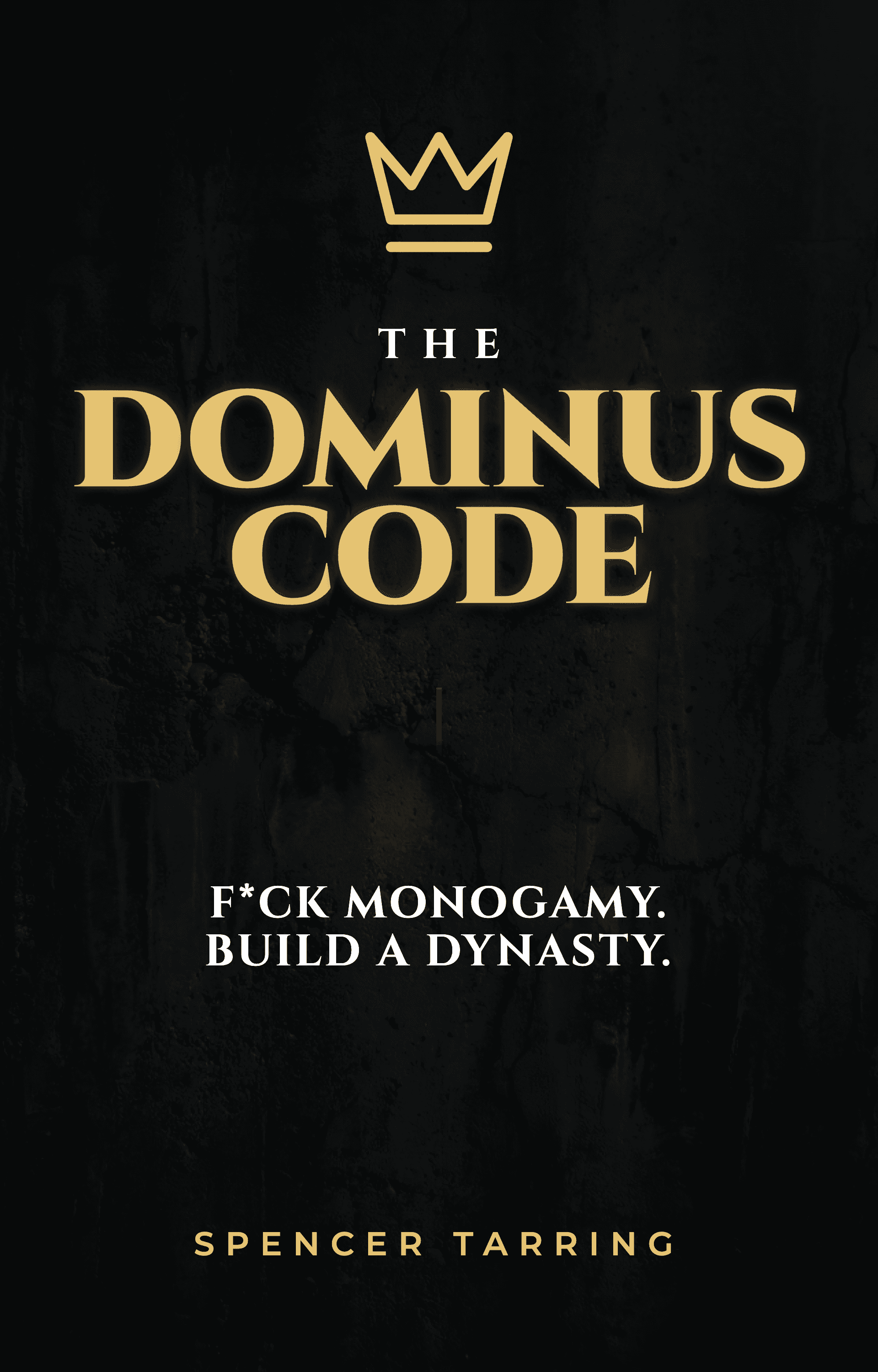
The book by Spencer Tarring
The Dominus Code
F*ck Monogamy. Build a Dynasty.
The provocation opens the argument. Continuity gives it purpose.
The Dominus Letter
Join The Dominus Letter
Spencer’s letters on civilisation, strength, self-autonomy, family, inheritance and consequence. The whole worldview, in one place.