

Civilisation
Continuity at scale.
Civilisation exists when one generation creates something the next is capable of receiving, maintaining and improving. Knowledge, children, capital, culture, technology and institutions form that inheritance.
Every generation inherits a world it did not build.
Roads, cities, languages, scientific knowledge, legal systems, schools and businesses arrive through accumulated work. No generation starts from nothing. The question is what it does with the starting point it receives.
Does it consume the inheritance? Maintain it? Strengthen it? The Code asks a man to bring that question into his own decisions, then follow the consequences outward.
Self-command makes people more capable. Households raise the next generation. Enterprise creates productive resources. Institutions preserve knowledge and coordinate work beyond a single life. Together, they shape the civilisation that follows.
Continuity requires capability.
Survival alone is a low ambition. A society can retain its name while losing the ability to educate, build, maintain infrastructure, create energy or protect the people within it.
The serious test is whether useful capacities are being renewed. Can children grow into competent adults? Can people build homes and businesses? Can institutions correct their failures? Can new technology improve lives without making people incapable of acting for themselves?
Physical strength and self-autonomy belong in this picture. A culture of capable people begins with the work people do on themselves.
Begin with strength & self-autonomy →The work of civilisation.
People & demography
Children, fatherhood, education and the conditions in which another generation can flourish.
Energy & infrastructure
The power, water, transport, homes and physical systems on which ordinary life depends.
Technology & AI
Tools that extend human capability, and the judgment to understand what they change or make fragile.
Capital & ownership
Resources built, maintained and used productively across generations.
Cities & governance
The environments, rules and institutions that make cooperation and building possible.
Culture & memory
Standards, knowledge and practices worth teaching, alongside the freedom to question what no longer works.
Build productive systems.
Businesses, technology, property and intellectual work can outlast the effort that first created them. Enterprise converts ability into something other people can use, develop and inherit.
The task is to create value and maintain the capacity to create it again. That requires skill, ownership, investment and a willingness to face reality when a system is failing. A successful quarter is one measure; a business able to train its successors is another.
Build beyond the founder.
Institutions carry memory. A school, company, archive, community or foundation can preserve a purpose after the person who began it is gone.
That only happens when responsibility can be transferred. Teach the work. Record the knowledge. Establish standards. Prepare successors who can exercise judgment, rather than merely repeat instructions.
Continuity includes adaptation. Preserve what remains useful, repair what is broken, and leave enough room for the next generation to build further.
Every decision has descendants.
A choice about education, technology, family or capital has effects beyond its first result. The Code asks you to follow those effects through time and across the people affected.
Use the consequence framework →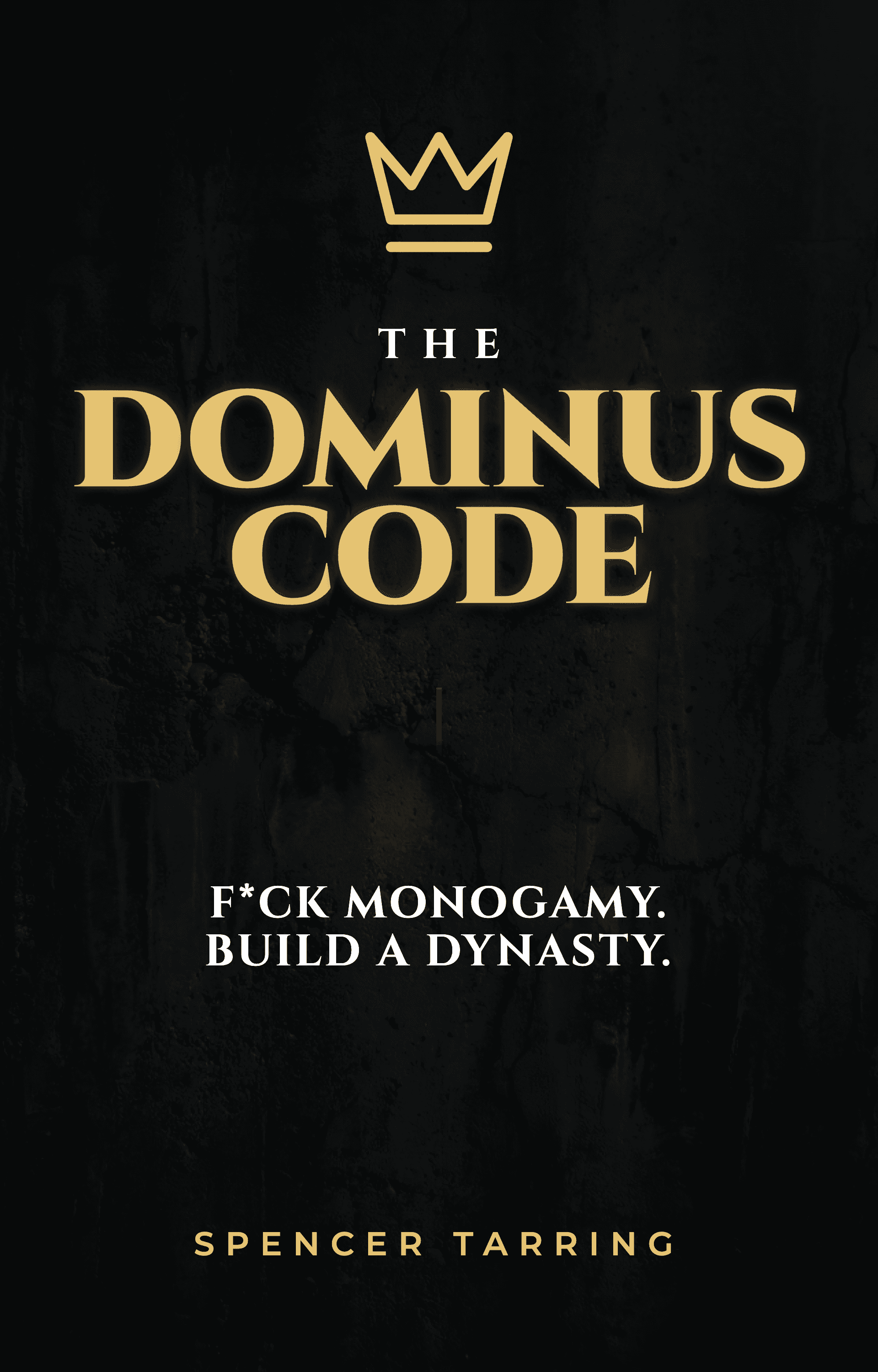
The book by Spencer Tarring
The Dominus Code
F*ck Monogamy. Build a Dynasty.
The provocation opens the argument. Continuity gives it purpose.